Navigating the New Arctic

In 2016, the National Science Foundation (NSF) introduced its Big Ideas, a set of ten bold, long-term research priorities designed to position the United States at the forefront of global science and engineering. These initiatives emphasize convergence research, bringing together diverse disciplinary perspectives to address complex societal and environmental challenges. While proposals responding to this solicitation are submitted through the Directorate for Geosciences, they are managed by a cross-Directorate team of NSF Program Directors, reflecting the inherently interdisciplinary nature of Arctic research.
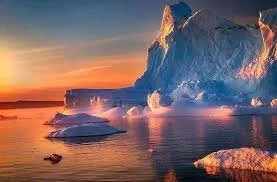
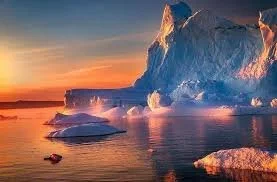
The Arctic is warming faster than nearly any other region on Earth. Climate projections suggest that continued warming could lead to an ice-free Arctic Ocean within decades. The Intergovernmental Panel on Climate Change’s Sixth Assessment Report documents far-reaching consequences of this warming, including mass loss from the Greenland Ice Sheet, longer and more intense fire seasons, increasing extreme heat events, thinning and loss of sea ice, heightened risks of ocean acidification, and reductions in spring snow cover.
These rapid and interconnected changes present both new opportunities and unprecedented risks for Arctic ecosystems, Indigenous and local communities, economic and political systems, infrastructure, and global climate feedbacks. At the same time, gaps in sustained observations and the tight coupling of natural, social, and built systems make it difficult to predict future Arctic conditions. Addressing these challenges requires new approaches to research, education, workforce development, and the integration of advances in science, engineering, and technology from both Arctic and non-Arctic contexts.
Research Tracks
Navigating the New Arctic advances these goals by supporting innovative, convergent research across the social, natural, environmental, computing, and information sciences, as well as engineering. The program emphasizes understanding interactions among natural systems, built environments, and social systems, and how these connections shape Arctic change and its global impacts.
This solicitation invites proposals in three complementary tracks:
NNA Incubator Grants, which support the formation and development of convergent research teams in preparation for larger-scale future projects.
NNA Research Grants, which fund creative, fundamental research addressing convergent scientific and engineering challenges associated with rapid Arctic change.
NNA Collaboratory Grants, which support collaborative research and training efforts focused on grand challenges emerging in the New Arctic.